- Upstream
Dough and fillings, made once
Batter and fillings are produced at a HACCP-certified plant rather than in each shop. One recipe, one process, one set of controls. That is what lets every store turn out the same piece. Recipe development and seasonal flavors start here too.
- In transit−18°C
Frozen at −18°C, delivered nationwide
Everything moves through a frozen chain at −18°C to stores across the country. Freezing is what buys the shelf life and the consistency; it is also what makes the model exportable, because what crosses a border is batter and filling, not an entire bakery.
- In store180–190°C
Three minutes, to order
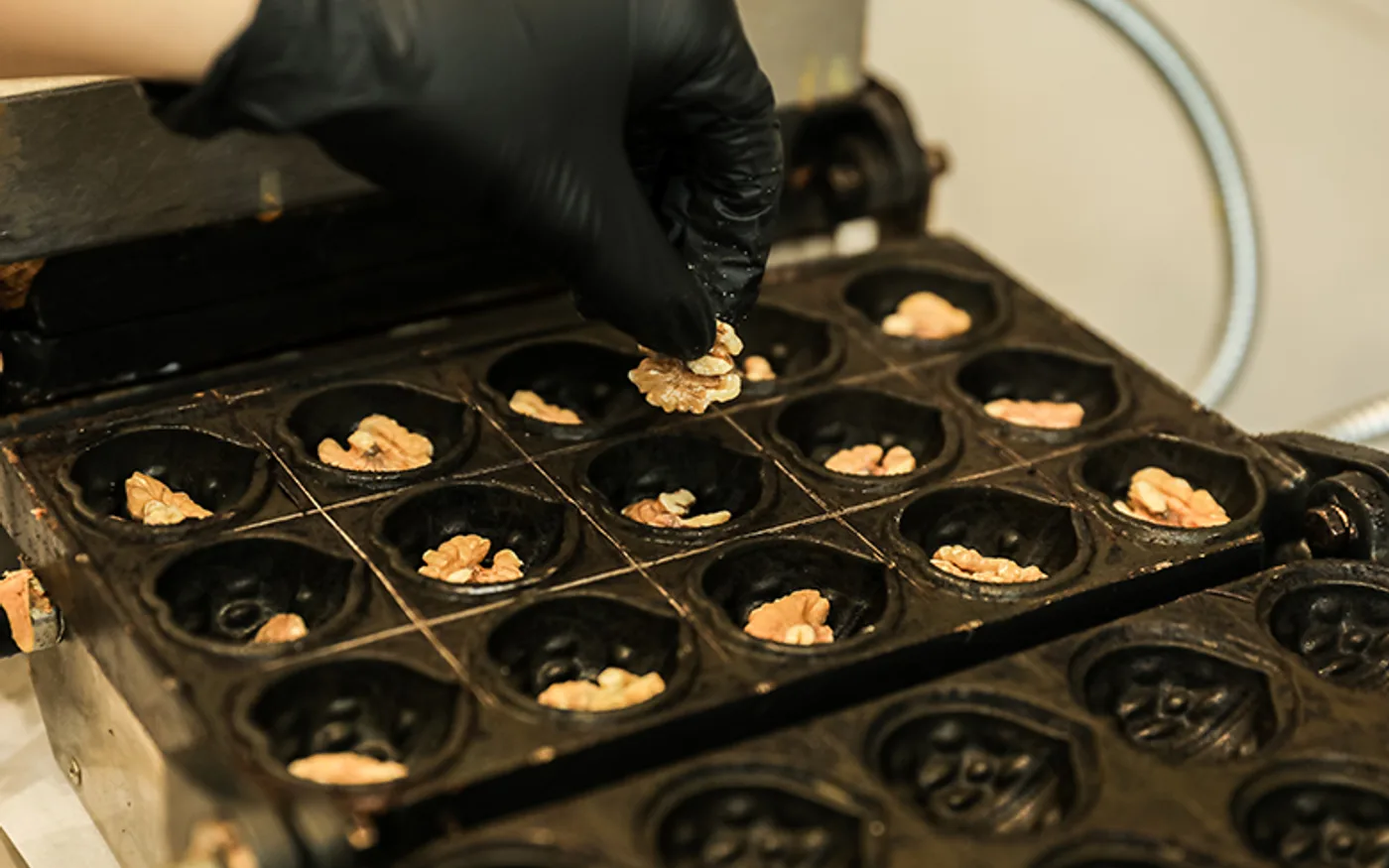
At the counter, batter and filling go into the mold and come out in about three minutes. Nothing is baked ahead into a warming cabinet. Customers watch it happen, which is half the appeal — and stores can bake in small batches as orders come in, because they bake to the queue in front of them.
- Behind the counter
A kitchen one person can run
The in-store process is designed to be straightforward to train and operate. That keeps store footprints small and lets the format fit places a full bakery cannot — hospital lobbies, campuses, apartment complexes, transit halls.
Why it matters if you are looking at a new market
Centralized production reduces the preparation each store has to do. Recipe, mixing and filling are finished at the plant, so training for a new market can focus on baking, service and daily operations rather than on reproducing a production facility locally.